


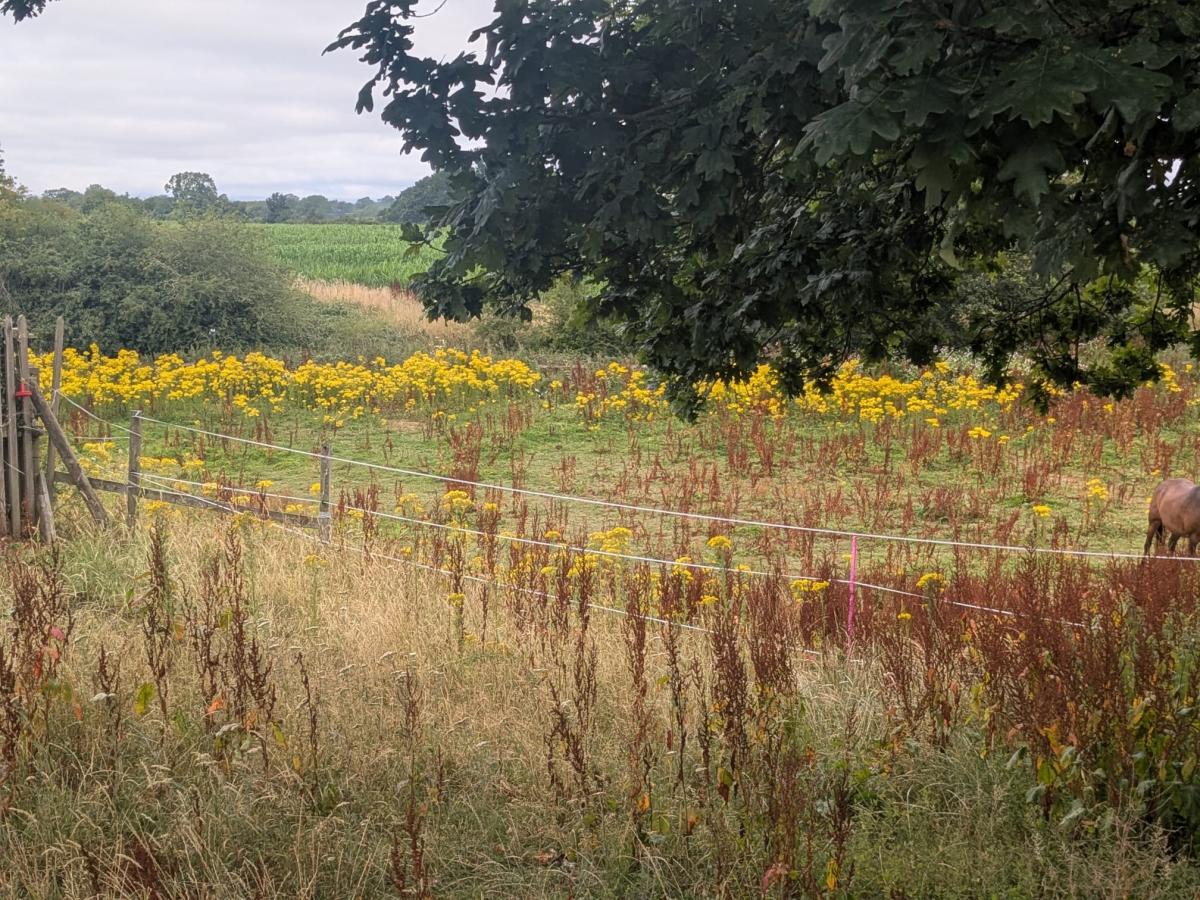
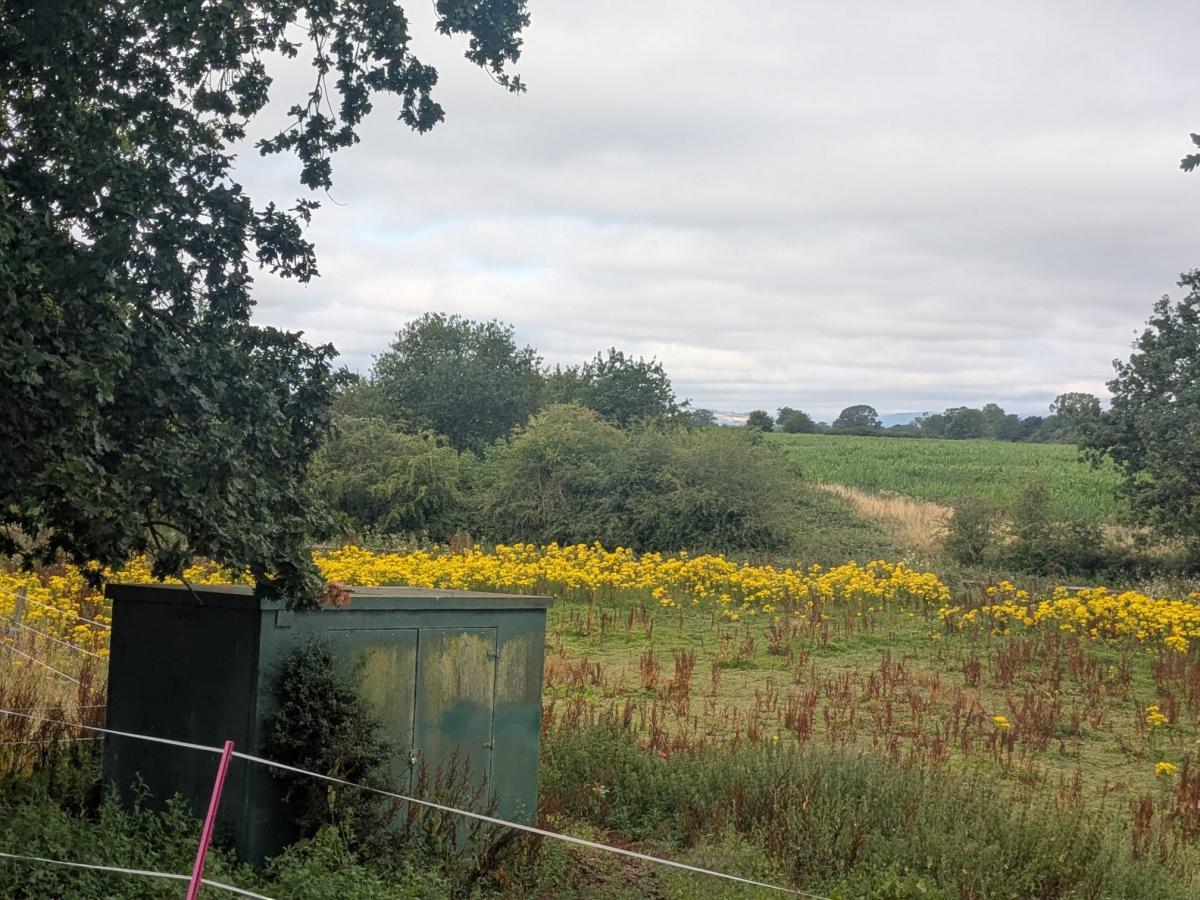

Concerns have been raised after a large amount of a toxic weed was found in a field on the edge of Ellesmere.
Complaints have been made after field near Ellesmere has become overrun with the toxic weed ragwort.
Common ragwort listed as one of the plants controlled under the Noxious Weed Act 1959 and is can be poisonous to livestock
While it is rarely eaten by animals due to its bitter taste, if consumed by an animal it can cause cirrhosis of the liver.
Anne Poynton has said she has tried to raise concerns about the spread of the weed in fields just off Oswestry Road.

“There are a lot of plants,” said Anne. “This year there are suddenly hundreds and hundreds of plants and a couple of the seeds have blown in here.
“In the back of the field there is a brook and it goes under the road and into the new house on the other side.”
READ MORE:
-
Gift shop owners celebrate return to high street with new store in Oswestry
-
Victorian house dating back to 1877 on the market for £700,000
-
Hundreds oppose plans for 300-plus homes on edge of Oswestry
Anne has tried to raise concerns about the outbreak as one of the fields has horses but has said that she was rebuffed by DEFRA when she tried to raise concerns.
This is despite DEFRA advising the public that “if you own horses, ponies or livestock you must not allow them to graze on land where you know ragwort is present.”
“I got in touch with DEFRA,” said Anne. “I was told horses are pets they don’t count as livestock.
“I was told by Natural England you will have to research and go to the Land Registry to find out the owner. Why have I got to go and do the research?”
Anne has said that ragwort was also seen in nearby roadsides which has since been cut down.
Shropshire Council said it was not responsible for this and reminded those involved that “where control of ragwort is required, recognised best practice is to remove plants by pulling them with the root system intact.
A spokesperson for Shropshire Council said: “Ragwort should ideally be removed before seed set, collected and disposed of appropriately, with sites monitored regularly to prevent re-establishment.
“While ragwort can pose a risk to livestock if consumed, it is also a native species that provides important benefits for pollinators and wildlife, including the cinnabar moth.
“As such, management should be proportionate and focused on locations where there is a genuine risk to grazing animals or where control is otherwise necessary.
“Responsibility for managing ragwort depends on land ownership, and action may be undertaken by a range of organisations or private landowners, rather than the council.”
DEFRA and Natural England have been approached for comment.


Share